


Introduction
Knowing the correct wheel size is essential when replacing or upgrading wheelchair wheels. Proper measurement ensures compatibility, safety, and comfort. In this guide, we’ll show you how to measure your wheelchair wheel quickly and accurately.
1. Remove the Wheel (Optional)
For the most accurate wheelchair wheel measurement, remove the wheel from the chair before you start. Taking off the rear wheel makes it easier to check the diameter, tire width, and hub width without mistakes.
Lock the brakes and, if needed, tip the chair slightly on a soft surface. If your wheelchair has a quick-release axle, press the button and pull the wheel out. For bolt-on axles, loosen the axle nut or bolt and slide the wheel off carefully. Keep any spacers or washers together, since they affect the hub width measurement.
Place the wheel flat on a table – now it’s ready for measuring.
Tip: if anti-tippers or side guards get in the way, remove them first for a smoother process.
2. Measure the Wheel Diameter
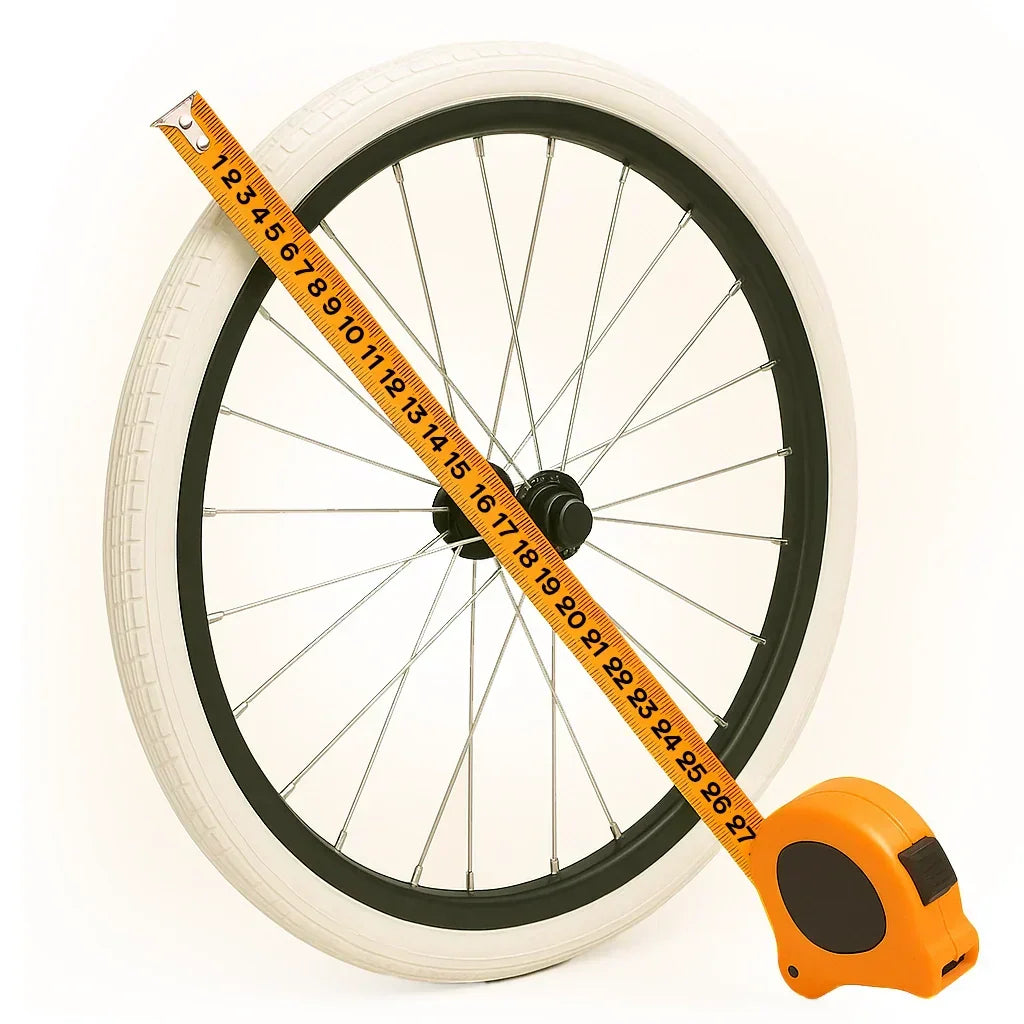
Use a tape measure to check the diameter of your wheelchair wheel. Place the tape across the center of the wheel, from one edge straight across to the opposite edge. This gives you the actual wheel size that is used when ordering replacements.
The most common wheelchair wheel diameter is 24 inches, but you may also find sizes like 20", 22", or 26". If you’re working with metric measurements, look for markings such as 540 mm or 559 mm, which correspond to standard wheelchair rim sizes.
Tip: Always measure from the outer edge of the tire to the opposite outer edge for consistency. If the tire is worn or missing, measure the rim itself.
3. Measure Tire Thickness (Optional)
If you plan to replace or upgrade the tire, measure its width (also called tire thickness). Place the tape measure across the tread from side to side.
Common wheelchair tire widths are 1 inch (25 mm), 1 3/8 inch (32 mm), or 1 3/4 inch (44 mm). Narrow tires are lighter and roll faster, while wider tires give more stability and comfort on uneven ground.
Tip: Always measure the tire when it’s properly inflated, since underinflation can make the width appear smaller.
4. Measure the Hub Width
The hub width is the distance between the inner sides of the hub where the wheel fits onto the frame. This measurement is crucial when replacing a wheelchair wheel, since even a small mismatch can prevent the wheel from fitting securely.
To measure, place the wheel flat and measure the space between the two inner hub faces. Common hub widths are 2 inches (50 mm) or 2.5 inches (65 mm), but they can vary depending on wheelchair type and manufacturer.
Tip: Keep track of any washers or spacers that were removed with the wheel, as they can affect the exact hub width needed for installation.
5. Read the Side Markings
Most wheelchair tires already have the size printed on the sidewall. This is the fastest way to confirm diameter and tire width without measuring. Look for markings such as:
- 24 × 1 (diameter in inches × tire width in inches)
- 24 × 1 3/8 (slightly wider tire option)
- 540 × 25 (metric size: rim diameter × tire width in millimeters)
24 × 1 (diameter in inches × tire width in inches)
24 × 1 3/8 (slightly wider tire option)
540 × 25 (metric size: rim diameter × tire width in millimeters)
These markings follow either the inch system or the ISO/ETRTO standard. For example, a 24 × 1 tire usually corresponds to ISO 540 × 25.
Tip: If the numbers on the tire don’t match your manual measurements, always trust the manufacturer’s printed markings—they are the standard reference for replacements.


